Technology
Hardware & IP module
The communication core is the same in every ASG control unit. The unit built around it follows the zone it serves; its role follows the software it runs.
In one sentence Every ASG control unit has a similar setup: an automotive controller and the ASG communication core, on the single ring for both power and data. The core is identical everywhere; what changes from zone to zone is the number of physical connections, not the way it works.
ASG Control Unit
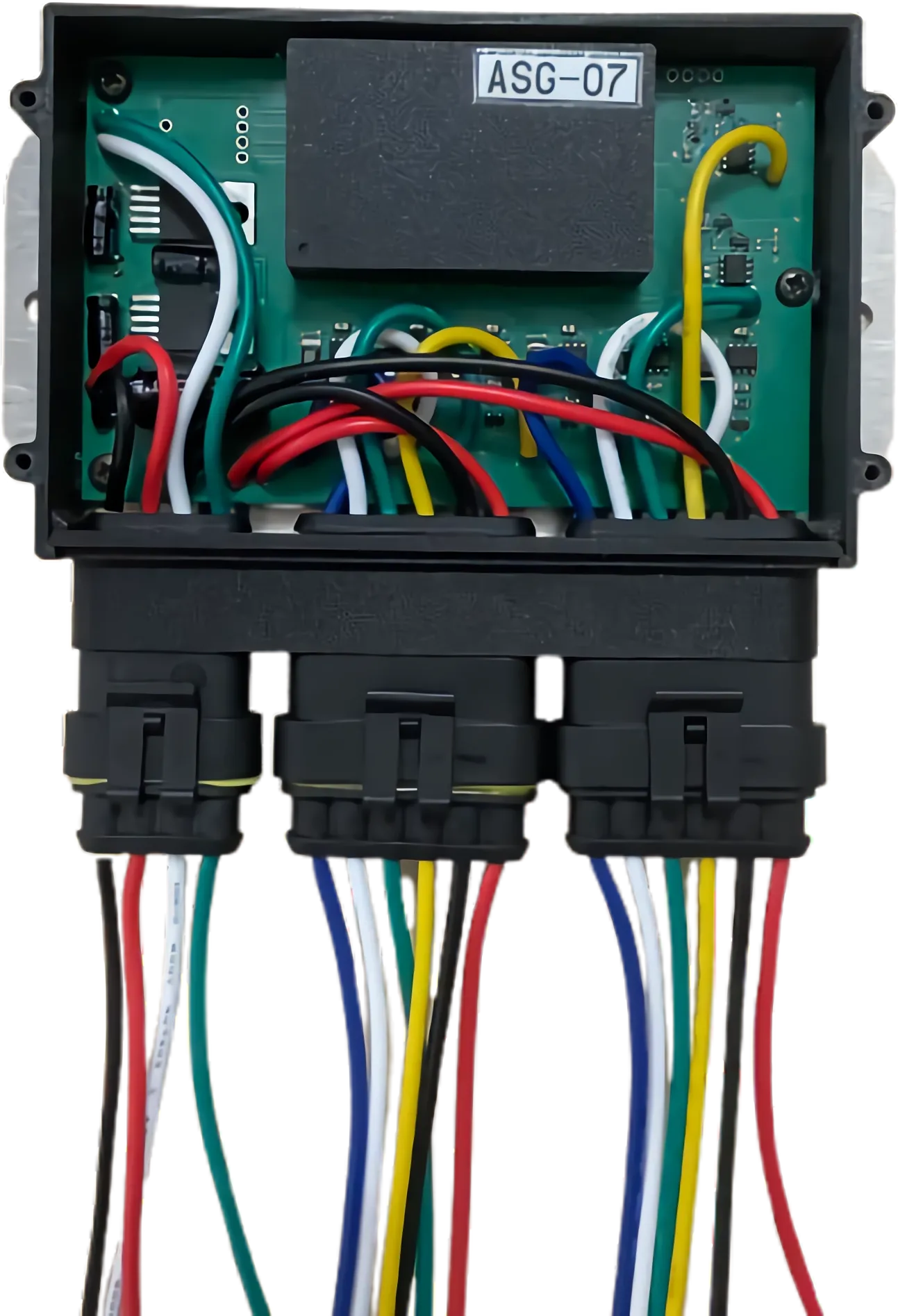
Inside every unit is the same small block, the ASG communication core: it runs the real-time communication and the physical ASG protocol, and nothing else. It is the part that does not change from one unit to the next.
Around it sit the parts that do change: a standard automotive microcontroller for the application, the connectors for the zone, message translators for any CAN, LIN or Ethernet devices still in that zone, and the keys that gate access to the unit.
A zone with a few sensors and a zone with thirty need different connector counts, so the units are close cousins rather than one part number. The core they share is what matters.
One unit, every role
ASG control units are universal, not function-specific. The same unit is a door unit in one place and a chassis unit in another, decided by where it sits on the ring and the software it runs. There is no separate part number to design, stock and service for each job.
That universality reaches down to the silicon. The communication core is not bound to one vendor’s microcontroller, so a given function is not locked to a particular supplier’s chip, and the same architecture carries across vehicle segments and manufacturers without a per-programme redesign. ASG is provider agnostic and universal in application.
Across the vehicle the units also act as one. Each runs a set of parallel computing units over synchronised streams of objects, and every unit commits the shared vehicle state together on the same 1 ms tick. Adding a unit adds to that compute pool; it does not lengthen the commit or the 1 ms.
Far fewer unique units means a simpler supply chain and simpler service, and it is the other half of the harness saving: the ring replaces the buses, universal units replace the fixed set of function-specific ECUs.
What each unit does
| Communication core | Common to all | The ASG microschema: real-time communication and the physical ASG protocol |
|---|---|---|
| Controller | Automotive MCU | A standard automotive microcontroller runs the application; no single-vendor lock-in |
| Points per unit | 2 to ~30 | Sensors and actuators in the zone; this sets the unit’s connector count |
| Branch reach | ≤ 1.5 m | Short stubs from the unit to its sensors and actuators |
| Local reaction | ~10 µs | Built-in short-circuit prevention: an electronic fuse, so no relays |
| Ring connection | Power + data | One medium, PLC over 12 / 24 / 48 V, or a twisted pair |
| State held | Full window | The whole committed vehicle state, refreshed every 1 ms |
The reaction time is a modelled value from ASG’s protocol description.
On the bench
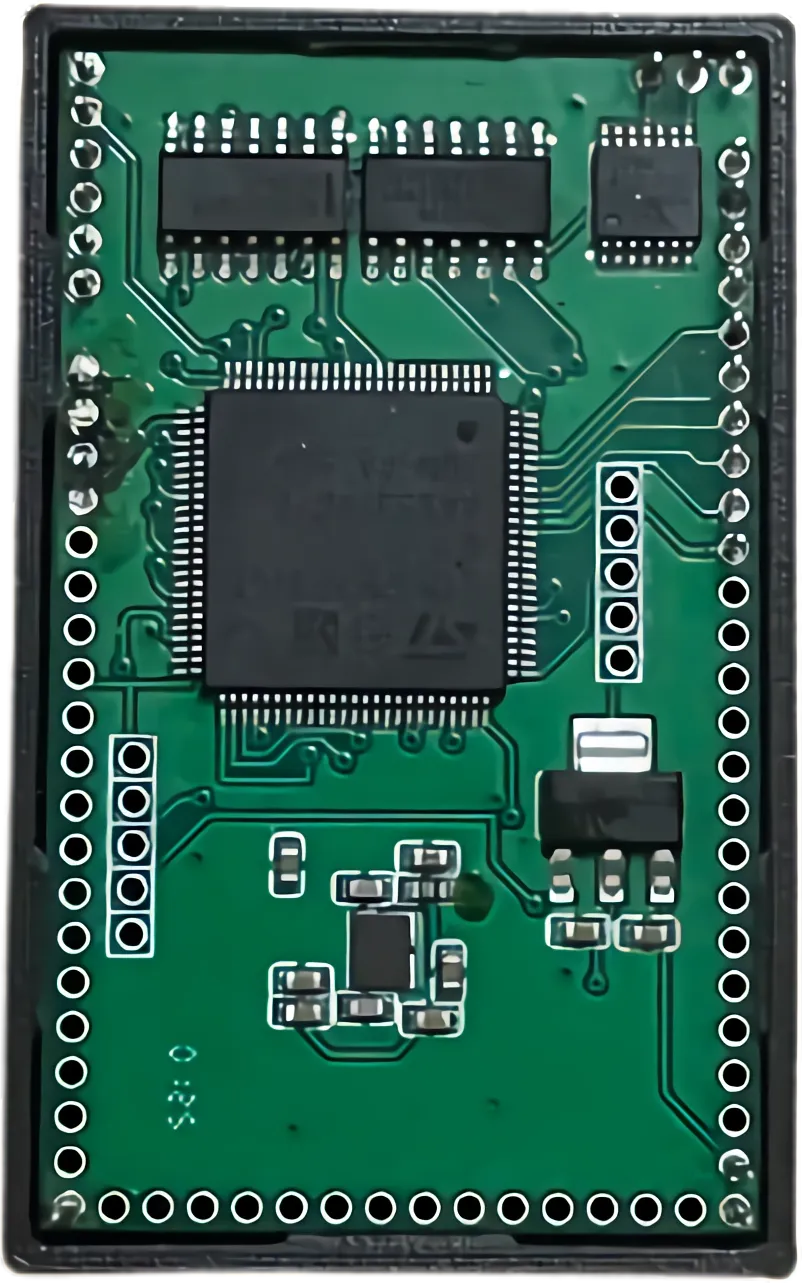
The board without its enclosure: an automotive microcontroller, the supporting chips, and the rows of headers where the zone’s connectors land. The ASG communication core sits alongside the MCU.
The controller is an off-the-shelf automotive part, not a custom device, which is what keeps a function from being tied to one chip vendor.
ASG runs on real hardware today, on the bench and in test vehicles. Production silicon is in development.
Questions
Is every ASG control unit the same hardware?
The communication core is. The unit around it is similar but not identical: a zone with a handful of sensors needs fewer connectors than one with thirty. The core, the ring interface and the software model are common to every unit, which is what cuts the number of unique control units on a platform.
What is inside one unit?
The ASG communication core, a small block that handles the real-time communication and the physical ASG protocol. Around it: a standard automotive microcontroller for the application, the connectors for the zone, message translators for any CAN, LIN or Ethernet devices still in that zone, and the keys that gate access to the unit.
How many sensors and actuators does one unit handle?
Between about two and thirty, on short branches of up to about 1.5 m. The architecture page explains how many units a given vehicle layout needs.
Is the module tied to a particular chip vendor?
No. The communication core runs on standard automotive microcontrollers, so a function is not locked to one supplier’s silicon, and the same design carries across vehicle segments and manufacturers without a per-programme redesign.
Does ASG still need relays or fuses?
The roughly 10 microsecond local reaction in each unit acts as an electronic fuse, so mechanical relays are not needed for short-circuit protection.
What silicon does the module use?
The demonstrator hardware is built around an automotive microcontroller plus the ASG communication core. Production silicon is in development.