Events Conference
World Intelligent Connected Vehicles Conference
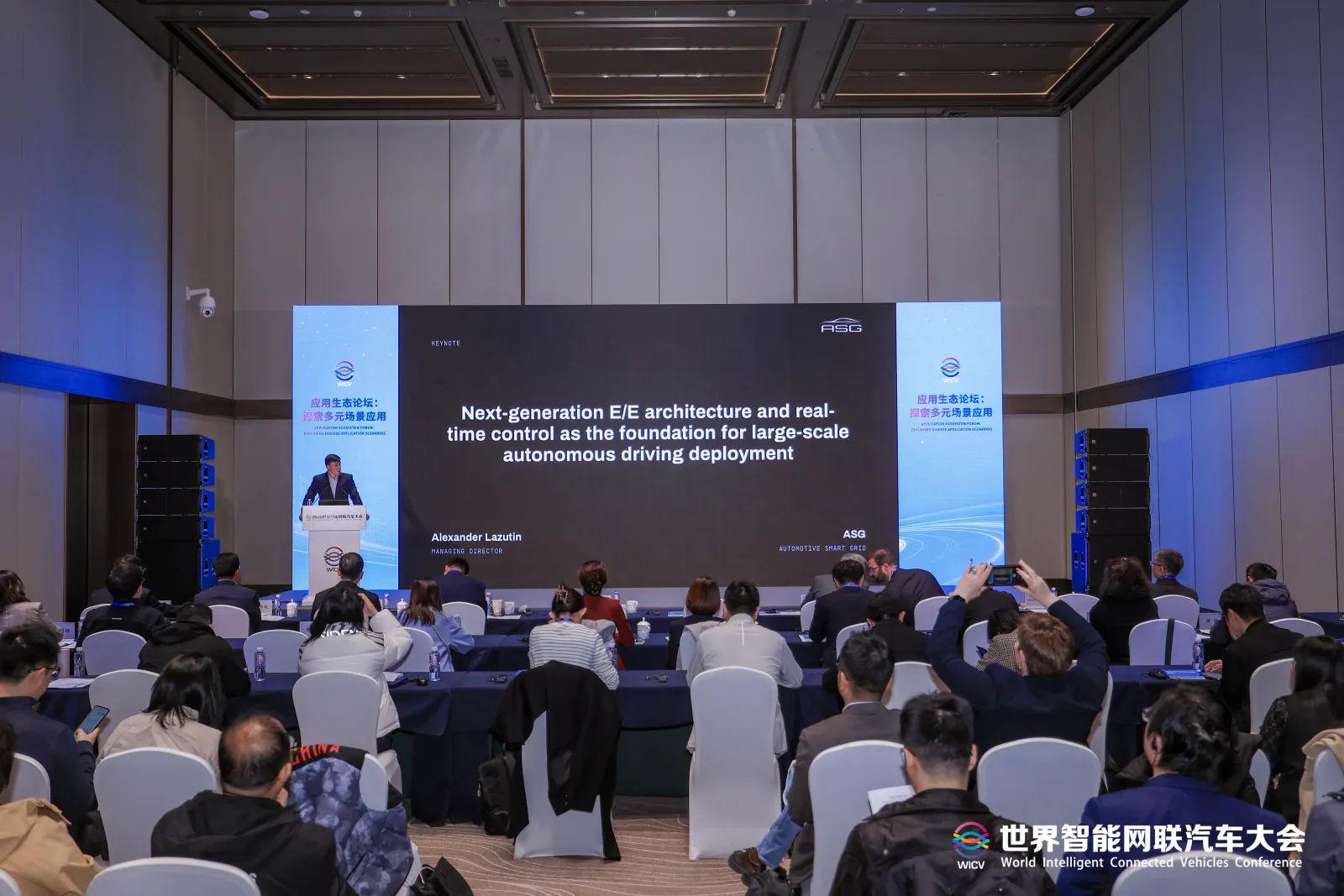
ASG spent 17 to 23 October in Beijing as part of a UK delegation. The week had three parts: visits to Li Auto, Xiaomi, Pony.ai and WeRide, a short introduction of ASG at a UK Government reception, and the World Intelligent Connected Vehicles Conference (WICV), where ASG gave a keynote at the Application Ecosystem Forum on 23 October.
Company visits in Beijing
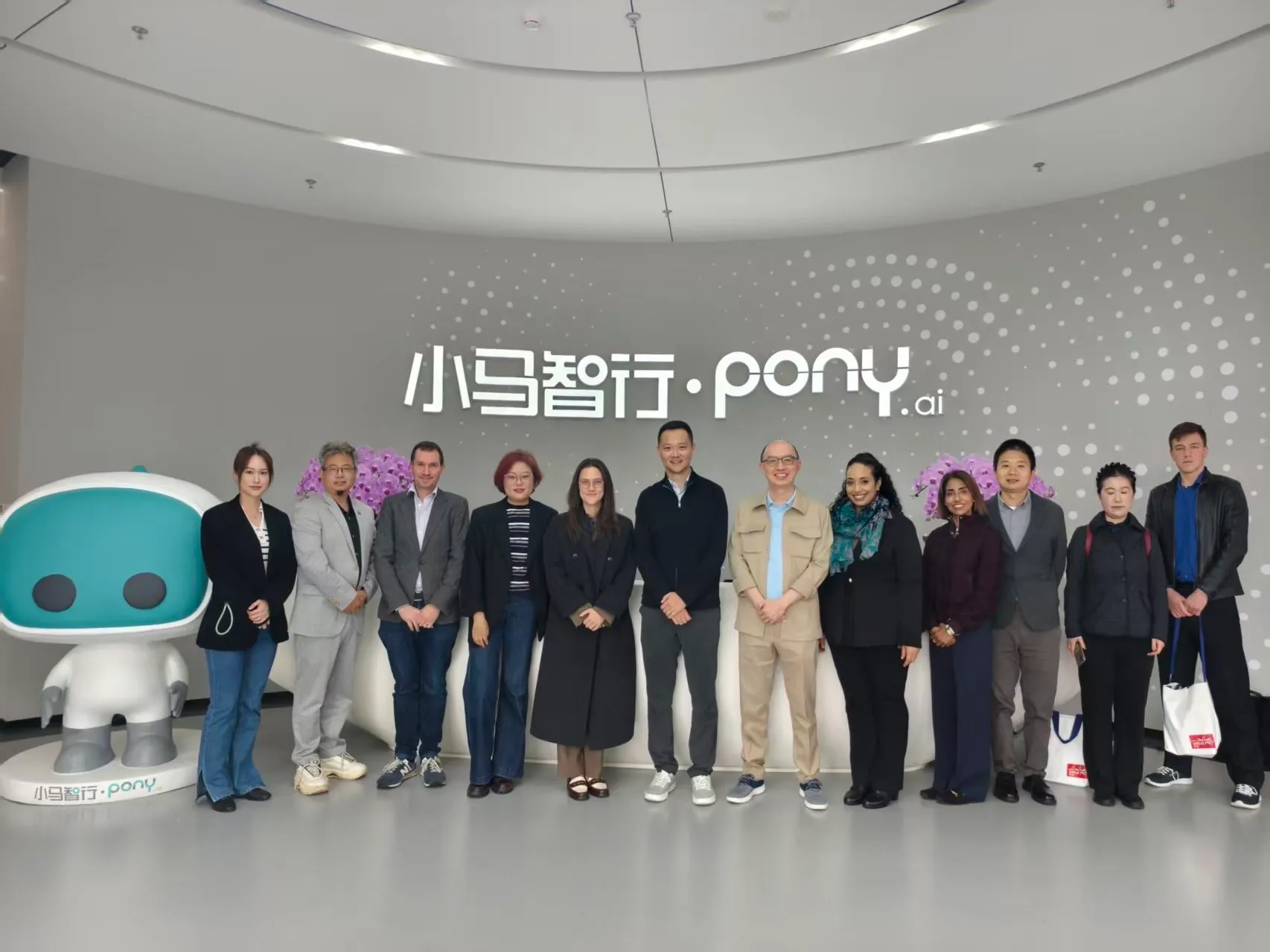
ASG visited Li Auto, Xiaomi, Pony.ai and WeRide. At each there were direct conversations with senior leadership, and each visit explored opportunities to collaborate.
Li Auto and Xiaomi build vehicles; Pony.ai and WeRide build autonomous driving systems and run robotaxi services. ASG’s case is that autonomy at scale rests on a synchronous real-time control layer, and it applies to both, which made the four visits a useful spread.
UK-China Automotive Industry Networking Reception
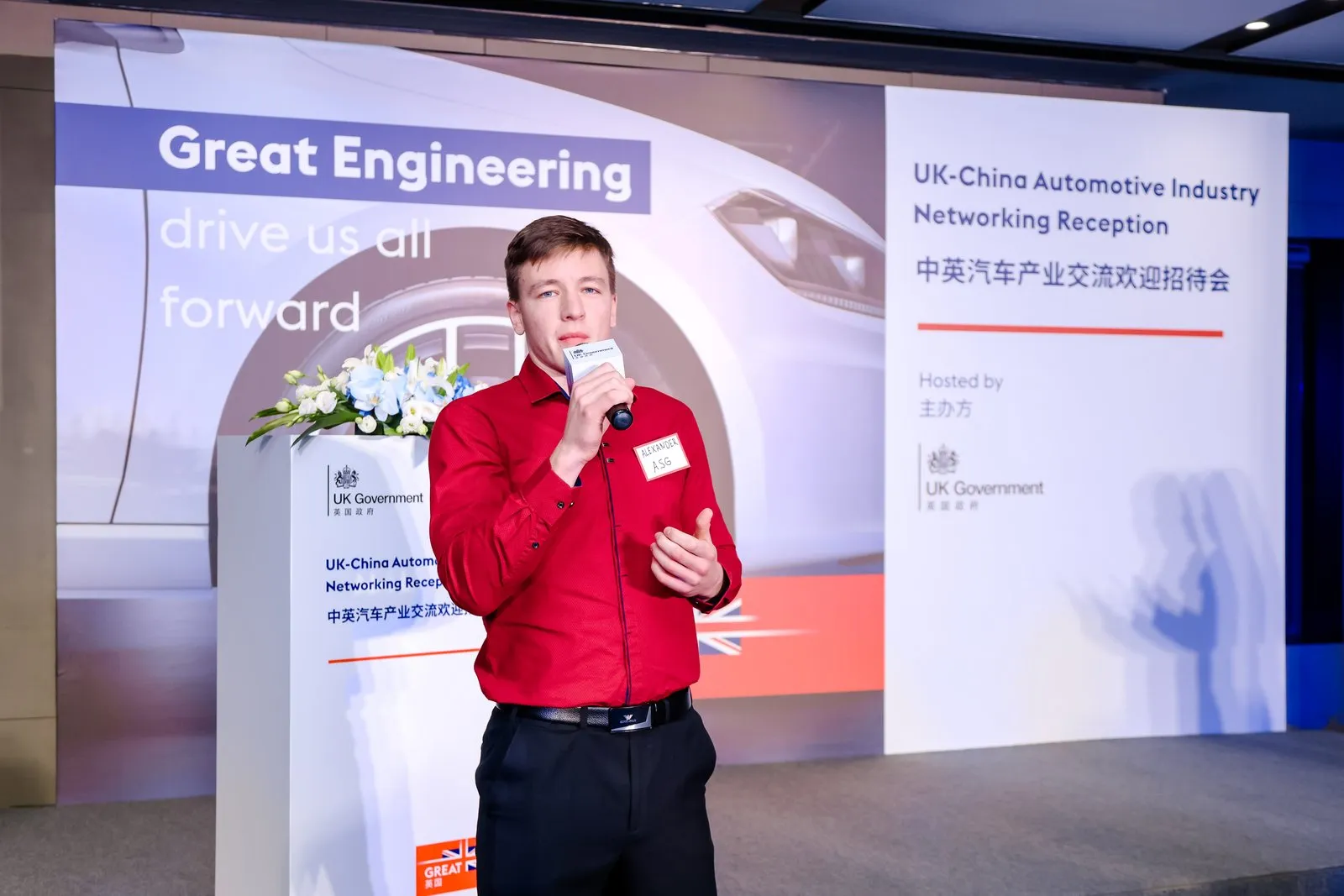
During the week the UK Government hosted the UK-China Automotive Industry Networking Reception. ASG gave a short introduction of the company to the room.
World Intelligent Connected Vehicles Conference
WICV ran from 21 to 23 October at the Beijing Etrong International Exhibition and Convention Center. It is China’s national-level professional conference on intelligent connected vehicles, approved by the State Council and hosted by the Ministry of Industry and Information Technology (MIIT), the Ministry of Transport and the Beijing Municipal People’s Government.
The programme featured the Mayor of Beijing, senior figures from the United Nations, MIIT leadership, and general managers from the major Chinese automobile groups, alongside BMW, Mercedes and Volkswagen.
Keynote at the Application Ecosystem Forum
On 23 October Alexander Lazutin, ASG’s Managing Director, gave a keynote at the Application Ecosystem Forum, “Exploring Diverse Application Scenarios”. The title was “Next-generation E/E architecture and real-time control as the foundation for large-scale autonomous driving deployment”.
The talk followed the autopilot’s own signal path. A Level 4 or 5 system fuses many sensors into one decision, a single motion vector, and then commands every actuator. Today those commands cross CAN FD, LIN, Automotive Ethernet and gateways, each with its own timing, so the vehicle acts on a vector built from signals of different ages.
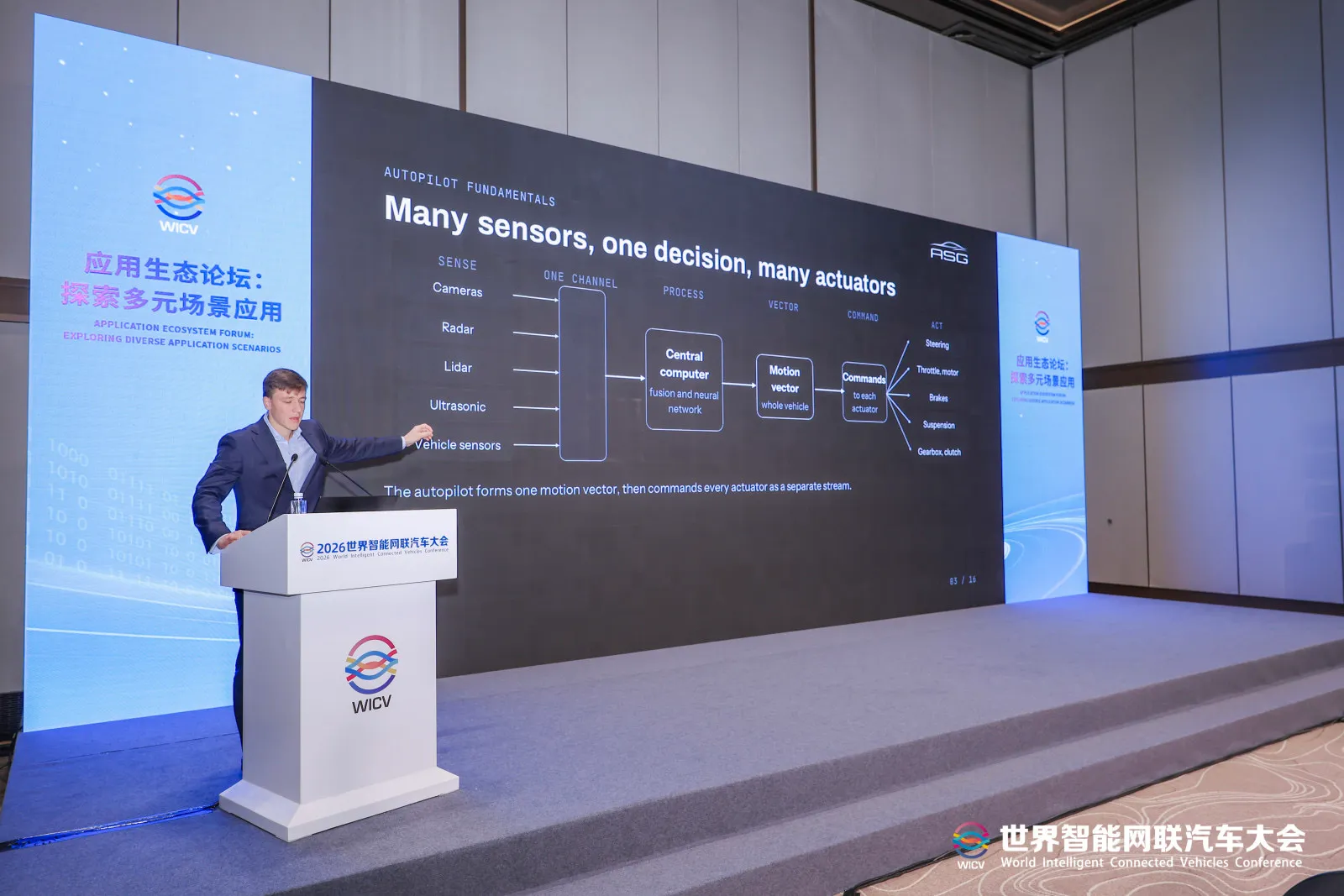
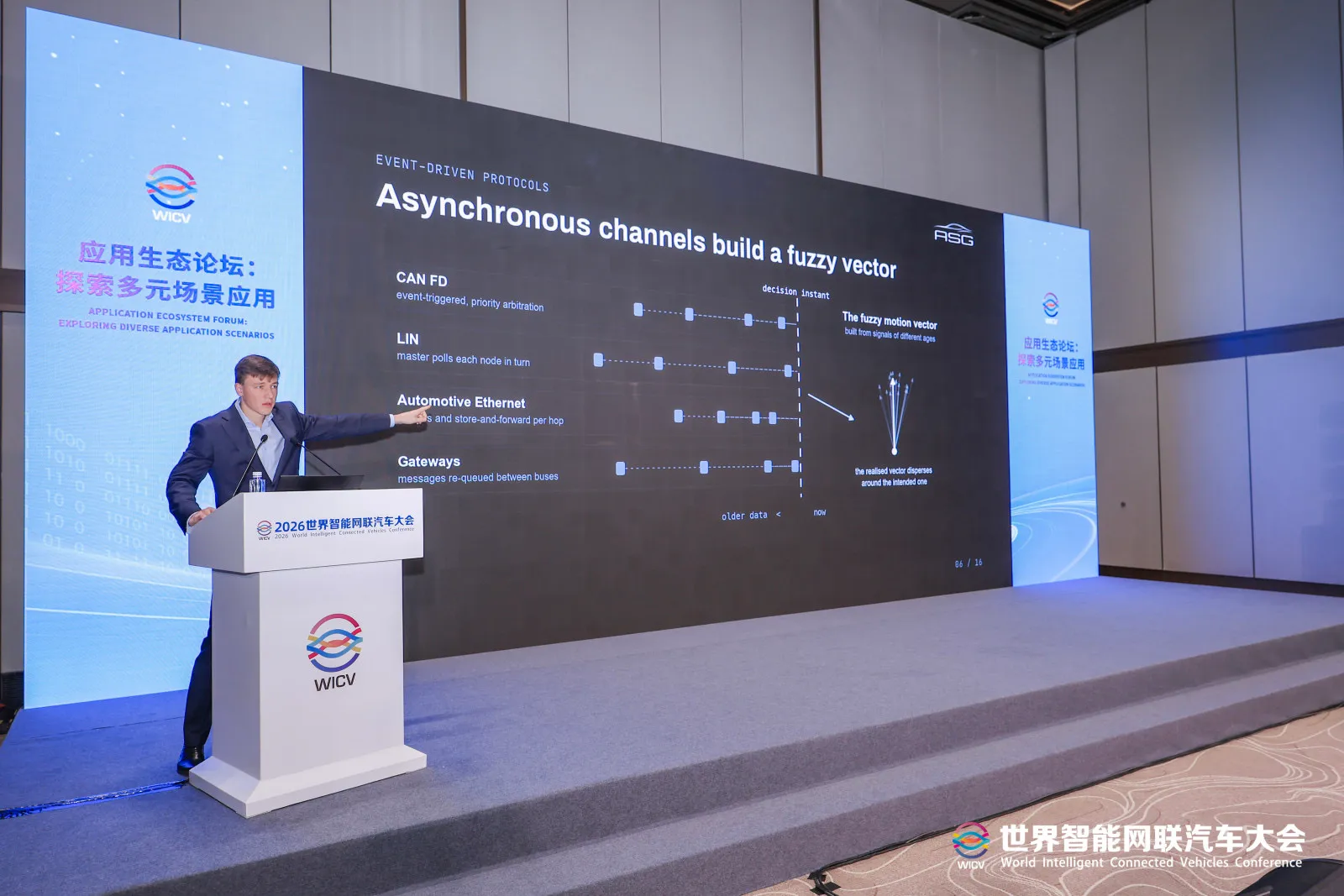
It then set that against control theory. The sampling theorem’s minimum is twice the signal frequency, but control practice samples ten to twenty times faster. A vehicle whose commands arrive on separate clocks cannot hold that margin across the whole chain.
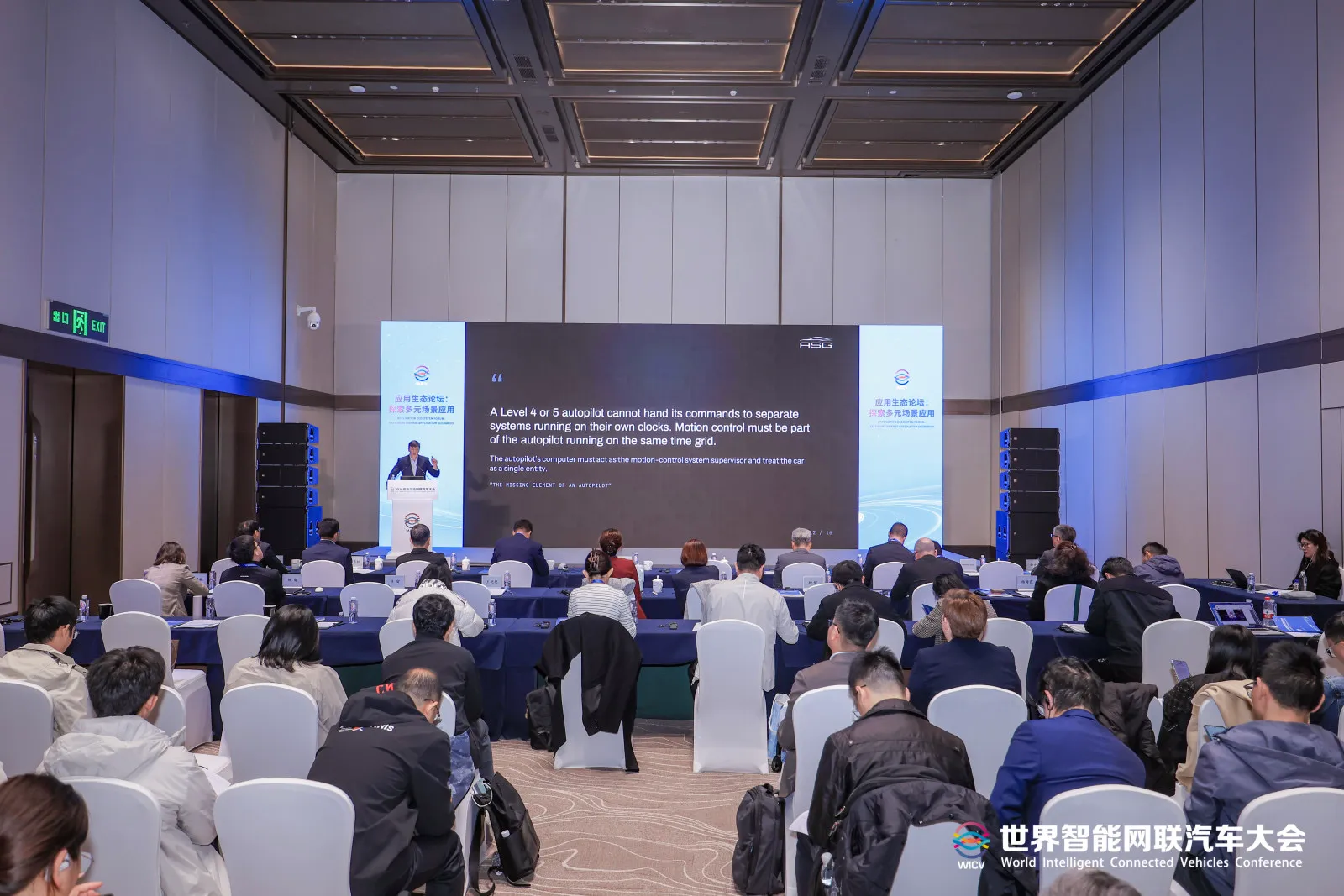
ASG’s answer is that every node shares one tick: all blocks commit the same 1 ms state window at once, so the whole chain from sensor to actuator runs as one control system. The same case is set out in The missing element of an autopilot and on ASG for autonomous vehicles.
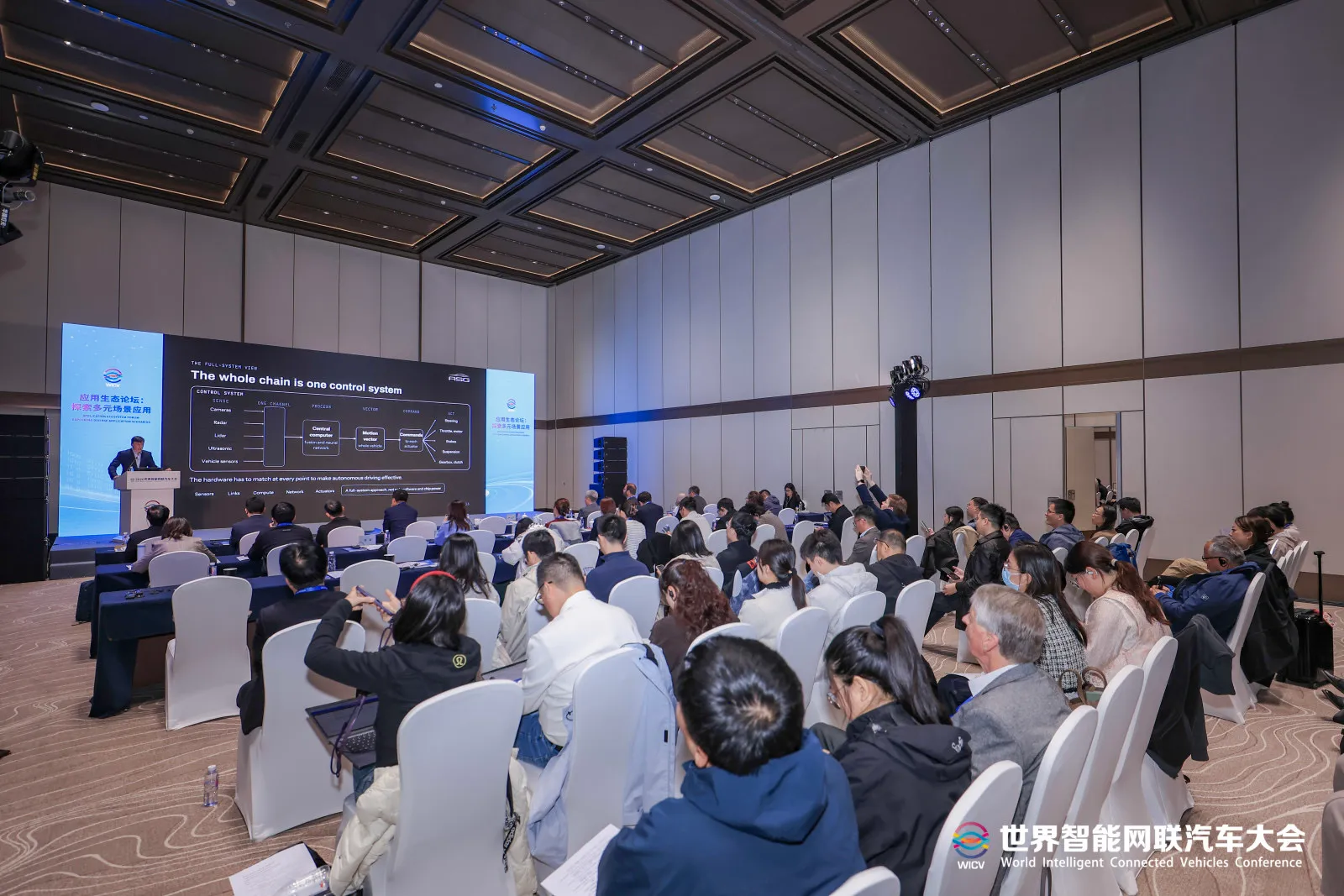
The organisers described the talk as a technical, useful and highly relevant presentation with great insights.
If you were at WICV, or work on a vehicle or autonomous driving programme in China and want to talk, get in touch.